
Federal Skilled Trades Class
Federal Skilled Trades Program (FSTP) – 2025
Looking to move to Canada and use your hands-on skills to build a future? Whether you’re a welder, electrician, plumber, or cook, the Federal Skilled Trades Program (FSTP) could be your express route to Canadian permanent residency. And in 2025, the doors are still open—but only if you play your cards right.
Let’s break it all down. No fluff, no jargon. Just clear steps, real tips, and what to definitely avoid.
What Is the Federal Skilled Trades Program (FSTP)?
The Federal Skilled Trades Program is part of Canada’s Express Entry system, designed specifically for skilled tradespeople who want to become permanent residents. If you’ve got work experience in a hands-on trade and want to live and work in Canada, this program could be your golden ticket.
It’s different from other Express Entry streams because it doesn’t require a university degree, and your language requirements are lower than those in the Federal Skilled Worker Program.
Who Is Eligible for FSTP in 2025?
Before you start dreaming about snowmobiles and Tim Hortons, make sure you tick all these boxes:
.
Work Experience
- At least 2 years of full-time work experience (or equivalent part-time) in a skilled trade within the last 5 years.
- Your work must fall under one of the National Occupation Classification (NOC) TEER 2 or 3 categories in the following major groups:
- 72: Industrial, electrical, and construction trades
- 73: General trades
- 82: Supervisors and technical jobs in natural resources, agriculture, and related production
- 92: Processing, manufacturing, and utilities supervisors
- 63200: Cooks
- 63201: Butchers and bakers


Job Offer OR Certificate of Qualification
- Either:
- A valid job offer for full-time work in Canada (at least 1 year), OR
- A certificate of qualification from a Canadian provincial or territorial authority (you’ll need to pass a trade exam and possibly get assessed).
Language Proficiency
- Minimum CLB 5 in speaking and listening
- Minimum CLB 4 in reading and writing
- Accepted tests: IELTS or CELPIP
Meet General Requirements
- Be admissible to Canada (no major criminal or medical issues)
- Intend to live outside Quebec (Quebec runs its own skilled trades program)
Application Process: Step-by-Step (2025 Edition)
Ready to turn your skilled trade into a permanent life in Canada? Here’s how to navigate the Federal Skilled Trades Program from start to finish—the smart, strategic way.
Step 1: Confirm Your NOC Code
Start by identifying your correct National Occupation Classification (NOC) code. Your work experience must match not just your job title, but also the core duties and employment requirements listed under your specific NOC. This is the foundation of your entire application—get it right the first time.
Step 2: Take an Approved Language Test
All applicants must prove language ability. You’ll need to take an approved test such as the IELTS General Training or CELPIP-General. Make sure your scores meet the minimum CLB levels: 5 for speaking and listening, and 4 for reading and writing. Your results must be valid at the time of application—so don’t wait too long!
Step 3: Secure a Certificate of Qualification or Job Offer
To be eligible for Federal Skilled Trades Program (FSTP), you must have either:
- A valid job offer from a Canadian employer for at least one year, or
- A certificate of qualification in your skilled trade issued by a Canadian province or territory.
If you’re applying without a job offer, start working on your trade certification early—it can take time and often includes exams and assessments.

Step 4: Create Your Express Entry Profile
Once you’ve nailed down your NOC, language test, and job offer or certification, it’s time to create your Express Entry profile. Be sure to select the Federal Skilled Trades Program as your immigration stream. Input your details accurately—this profile is your ticket into the pool.
Step 5: Enter the Express Entry Pool
Once submitted, your profile enters the Express Entry pool, where it’s ranked using the Comprehensive Ranking System (CRS). The higher your score, the better your chances of being invited to apply. But don’t stress— Federal Skilled Trades Program (FSTP)-specific draws often have lower cut-offs than other Express Entry streams.
Step 6: Wait for an Invitation to Apply (ITA)
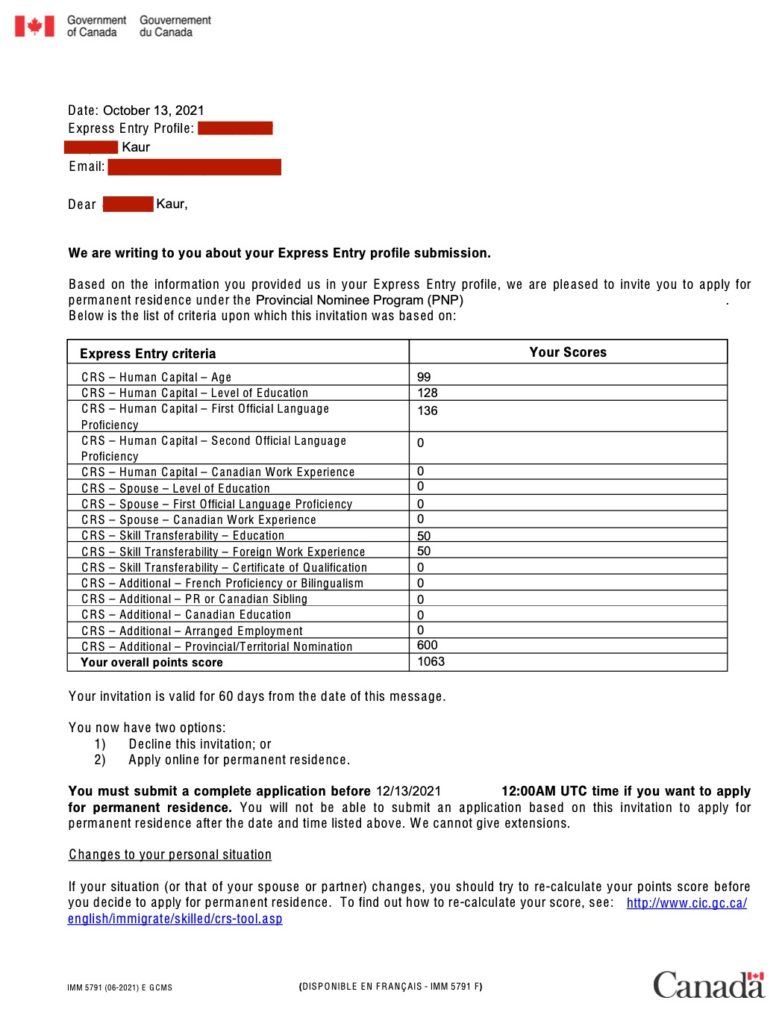
Now it’s a waiting game—but not forever. IRCC regularly conducts category-based draws, including ones that specifically target tradespeople. If your profile aligns with the current focus and your CRS is competitive, you’ll receive an Invitation to Apply (ITA) for permanent residence.
Step 7: Submit Your PR Application Within 60 Days
Once you receive your ITA, the clock starts ticking. You’ll have 60 days to submit your complete PR application, including documents like police certificates, medical exams, proof of funds (if required), and more. Make sure everything is 100% accurate—this is your final pitch to IRCC.
Step 8: Get Approved, Land in Canada, and Start Fresh
If all goes well, you’ll receive your Confirmation of Permanent Residence (COPR). From there, it’s just a matter of booking your flight, landing in Canada, and starting your new life as a permanent resident. Welcome to your new home!
Real-World Example: Meet Marco the Welder
Marco, a 32-year-old welder from Brazil, had 4 years of experience under his belt. He didn’t have a degree, but he passed a trade certification exam in Ontario. He took IELTS (scored CLB 6), got into the Express Entry pool, and received an ITA during a trade-specific draw.
Two years later? He’s now working in Toronto, with PR status and free healthcare.
If you’re a skilled tradesperson aiming to make Canada your permanent home, the Federal Skilled Trades Program (FSTP) offers a tailored pathway to achieve this goal. This program, managed under Canada’s Express Entry system, is specifically designed for individuals proficient in skilled trades who seek permanent residency.
Do you qualify?
- At least 2 years of full-time (or part-time equivalent) work in a skilled trade in the last 5 years prior to your application date
- A full-time job offer in Canada of at least one year in length or a Certificate of Qualification in your trade
- Required language skills for each language category (see below)
- Proof of Settlement Funds: applicants without an offer of employer must demonstrate sufficient finances to immigrate to Canada (see below)
- Intend to live outside the province of Quebec

What is a Skilled Trade?
- industrial, electrical, and construction trades
- maintenance and equipment operation trades
- supervisors and technical jobs in natural resources, agriculture and related production
- processing, manufacturing and utilities supervisors and central control operators
- chefs and cooks
- butchers and bakers
At VisaPath, we ensure applicants select the correct NOC for their specific occupation, ensuring they are credited with the experience they deserve.
Does my Work Experience Qualify?
Applicants must be qualified and certified to practice in their trade for the work experience to count.
- Unpaid work
- Work during an apprenticeship or training
- Part time combination of work and study
- Work experience while not qualified or certified to practice in your chosen trade
NOTE:In many trades, such as plumbers and electricians, it is common to be self-employed. This means that many applicants cannot provide typical documentation one would receive from working as an employee. At VisaPath, our representatives can steer you to alternative ways of proving your work experience and job duties.
Proof of Funds
When applying through the Federal Skilled Trades Program (FSTP), proof of funds is a critical requirement—unless you’re already authorized to work in Canada and have a valid job offer from a Canadian employer. If you’re applying without a job offer, this section applies to you.
Why is Proof of Funds Required?
Canada wants to ensure that newcomers have the financial ability to support themselves and their families during the initial months of settlement. Moving to a new country comes with costs—housing, transportation, food, and more—and immigration officers want to know you’re prepared.
Who Needs to Provide It?
You must show proof of funds if:
- You do not have a valid job offer from a Canadian employer, and
- You are not currently authorized to work in Canada
You do not need proof of funds if:
- You have a valid Canadian job offer, or
- You’re already working legally in Canada
Proof of Settlement Funds
Your funds must be accessible and transferable. They cannot be in the form of assets or hindered by debts or other financial obligations.
TIP: if you have an accompanying spouse, you can co-mingle your funds to meet the financial requirement.
| Family Size | Minimum Funds Required (CAD) |
| 1 person | $14,690 |
| 2 people | $18,288 |
| 3 people | $22,483 |
| 4 people | $27,297 |
| 5 people | $30,690 |
| 6 people | $34,917 |
| 7 people | $38,875 |
| Each additional person | +$3,958 |
Note: You must include yourself, your spouse or partner, and any dependent children—whether they are accompanying you to Canada or not.
Acceptable Forms of Proof
IRCC wants to see liquid, readily available money. This means:
✔ Acceptable:
- Bank account balances
- Official letters from financial institutions
- Fixed deposits or term deposits (must be liquid)
- Mutual funds or savings accounts with no withdrawal restrictions
✘ Not Acceptable:
- Real estate or property value
- Borrowed money or loans
- Cryptocurrency holdings
- Assets tied up in business or investment accounts with penalties for early withdrawal
When to Show Proof of Funds
You’ll need to provide your proof of funds at two key points:
- When you create your Express Entry profile (you declare it)
- When you receive an Invitation to Apply (ITA) and submit your full PR application (you submit documents)
The funds must be available at the time you apply and must remain available throughout the process.
Pro Tip: Joint or Shared Accounts
If the money is in a joint account with a spouse, that’s fine—just make sure their name is listed, and you include a marriage certificate or proof of common-law status. But if the account belongs to someone else, you’ll need a legally binding letter confirming that the money is yours to use.
Language Skills
- Speaking – CLB 5
- Listening – CLB 5
- Reading – CLB 4
- Writing – CLB 4

Common Mistakes to Avoid
- Inaccurate NOC Code Selection: Ensure your work experience matches the NOC code you claim.
- Insufficient Proof of Funds: Provide clear evidence of financial resources as required.
- Expired Language Test Results: Language test results must be valid at the time of application.
- Incomplete Documentation: Submit all required documents to avoid delays or refusals.
Benefits of the FSTP
- Tailored for Tradespeople: Specifically designed for skilled trades workers.
- Lower Language Requirements: Compared to other Express Entry programs.
- Potential for Faster Processing: Through the Express Entry system.
Why FSTP Might Be Right for You
- No degree required – trade skills count more than academic credentials
- Lower language thresholds compared to other Express Entry streams
- Pathway to PR without Canadian work experience
- Targeted Express Entry draws often focus on trades
.
What Are the Downsides?
- You must have either a Canadian job offer or a certificate of qualification
- Some provinces make trade certification difficult or expensive
- No guarantee of an ITA unless your CRS score is competitive
- Quebec applicants not eligible under this program
Pro Tips for a Stronger Application
- If you don’t have a job offer, start working on provincial certification ASAP
- Consider provincial nomination (PNP) in trades – many provinces love skilled tradespeople!
- Boost your CRS score with spouse points, language re-testing, or additional credentials
- Work with a regulated immigration professional to avoid rejections
FSTP 2025 CRS Draws: What You Need to Know
IRCC now conducts category-based Express Entry draws—including dedicated rounds for trades occupations. If you’re in the pool with a valid FSTP profile and your CRS score is competitive (often lower than FSW draws), you could receive an ITA in a targeted draw, even if your score is below the general cutoff.
Final Thoughts: Is FSTP Right for You?
If you’ve got hands-on experience in the trades, and you’re ready to bring your skills to Canada, the Federal Skilled Trades Program could be your best immigration pathway. It’s tailored, accessible, and built for people just like you—those who work hard, solve problems, and build with their hands. Just remember: the paperwork needs to be airtight, your strategy needs to be right, and timing is everything.
Ready to Get Approved? Let’s Talk.
How We Can Help
Book a consultation today, and let’s build your future in Canada—brick by brick.

Testimonials

I am very pleased with the team and their work. The lawyers I worked with to get the permanent residency were all professionals and very quick to respond to my questions. It was a long process but not because of the firm: all the papers needed for the application took time to get issued and then to be processed by the immigration office. Overall, thanks to the team, I was relieved of any stress related to the application as I just needed to follow their guidance. I definitely recommend their service for anyone who is applying for permanent residency.
– Isabelle de Laigue
I would like to thank Shabnam and her team for all their help and guidance in securing my permanent resident status. They are a professional law firm who know the express entry process very well. I would highly recommend them to anyone who is applying through the express entry program.
– Mahima Raina
Frequently Asked Questions
What is the difference between Federal Skilled Worker program and federal skilled worker trades program?
The other category is specifically for highly skilled workers in the trading field. The trading field includes jobs in manufacturing, industrial sectors, food industries, etc.
Usually, the federal skilled workers program requires a high level of education for the consideration of the job position.
What educational requirements do I need in order to be eligible under this route?
They will see if your educational certificate, diploma or degree, or any other types of foreign credentials can assist in obtaining enough points for this program.
What is the processing time?
If you qualify under the federal skilled workers trade program and you receive an invitation you have 90 days to submit your supporting documentation.
If you have submitted a complete and strong package, then you can expect a decision within 6-12 months. If you have not completed the application correctly that will cause delays, a procedural fairness letter or it could result in refusal.