

If you’re planning to immigrate to Canada through Express Entry, knowing how to maximize your CRS score is crucial. Many skilled workers get stuck because they underestimate how points are calculated, or they submit profiles with gaps and inconsistencies. In this guide, we break down how the CRS score works, why yours may be stagnant, and practical ways to increase it by 50–150 points even if you think your profile is already strong.
Understanding Express Entry in 2026
Express Entry is Canada’s primary immigration system for skilled workers seeking permanent residence. The system is points-based and highly competitive. In 2026, Canada continues to focus on category-based draws, targeting applicants who bring high-demand skills, strong language proficiency, or Canadian experience.
Applicants are often not selected because their CRS scores are too low, their profiles are incomplete, or their documentation contains errors. Knowing the pillars of the CRS system is the first step toward improvement.
The Four Pillars of the CRS Score
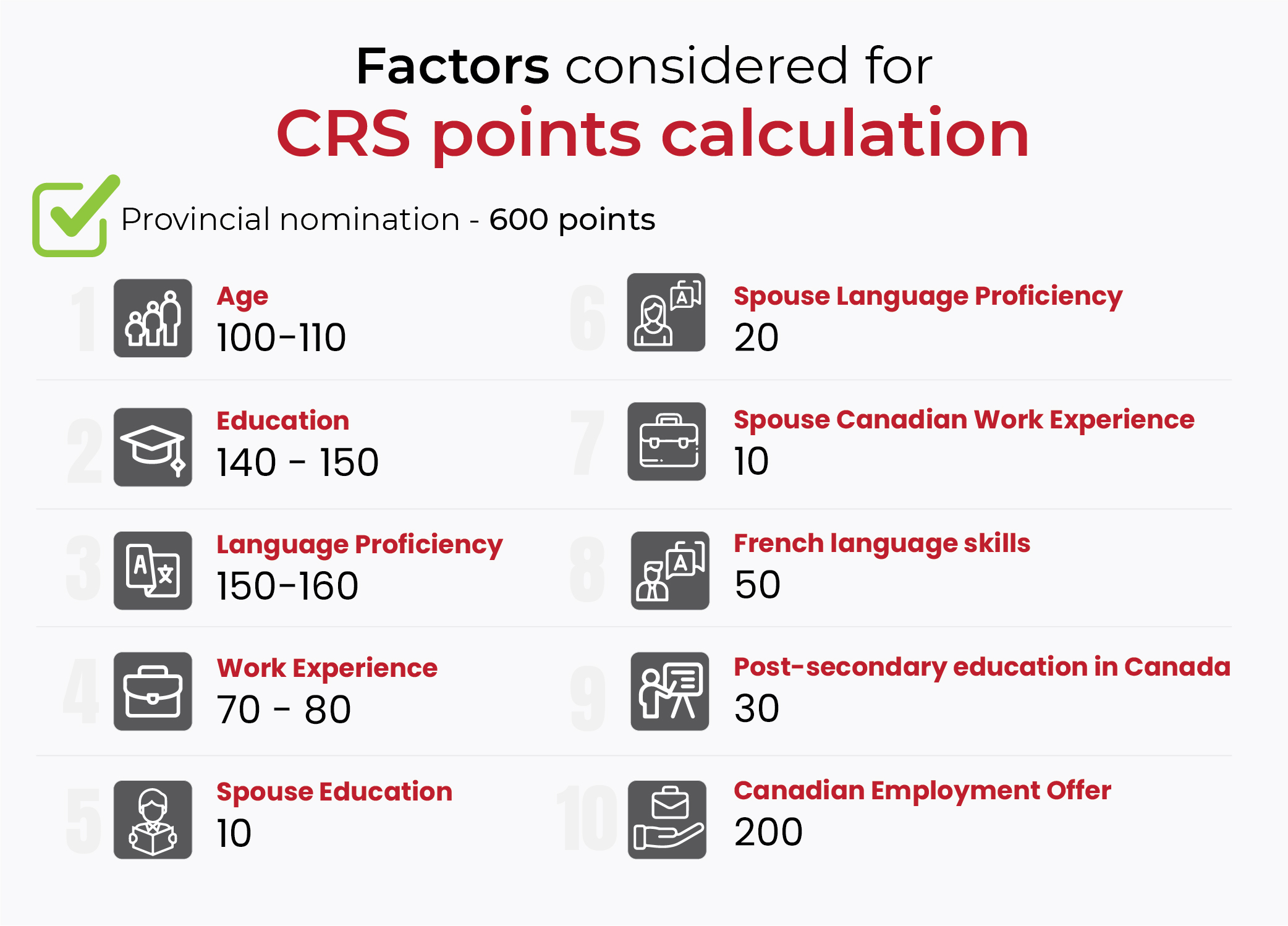
Core Human Capital
This includes your age, education, language proficiency, and Canadian work experience. Together, these factors make up a significant portion of the CRS points. Younger applicants with strong language skills and Canadian work experience naturally score higher. However, many underestimate how each component interacts. For example, even a small improvement in language proficiency can create transferability boosts when combined with education or foreign work experience.
Spouse Factors
If you include a spouse or common-law partner, their education, language proficiency, and Canadian experience also affect your CRS. Sometimes, including a spouse increases points, but other times excluding them or making them the primary applicant can yield better results. Every case requires strategic analysis.
Skills Transferability
Skills transferability is where language, education, and foreign experience intersect. Strong performance in one category can magnify the points from another. For instance, three years of foreign work experience combined with high language proficiency can significantly boost your total score. Canadian experience, when combined with other factors, further increases the likelihood of receiving an invitation.
Additional Points
Additional points can be decisive for borderline profiles. Points are awarded for:
- French language ability
- Arranged employment in Canada
- Provincial nomination
- Canadian study or family connections
Even modest French proficiency can add points that make the difference between being selected and waiting for the next draw.
Strategies to Increase Your CRS Score
1. Maximize Language Proficiency
Language remains the single most impactful factor. Raising your Canadian Language Benchmark (CLB) level can unlock hundreds of points, especially when transferability factors are included. French ability adds another layer of opportunity through additional points.
The key is planning and preparation. Rushing a language test without proper preparation can limit your CRS potential.
2. Reassess Educational Credentials
Many applicants assume their foreign degrees are automatically recognized as equivalent to Canadian standards. A second Educational Credential Assessment (ECA) from another recognized agency can sometimes improve points. Even small differences, like recognition of a bachelor’s degree versus a foreign diploma, can shift your CRS score substantially.
3. Correct Your NOC Code
A common mistake is choosing an incorrect National Occupational Classification (NOC) code. Officers evaluate the duties performed, not the job title. Misaligned NOCs can result in zero points for eligibility and may even trigger refusals.
4. Increase and Clarify Work Experience
Canadian and foreign work experience is critical. While one year is sufficient for some points, three years of documented experience, combined with high language proficiency, significantly increases the transferability of skills. Canadian work experience carries the most weight and should be documented clearly.
5. Strategically Evaluate Spousal Impact
Spousal factors can either increase or decrease your CRS. A detailed analysis should consider whether the spouse should be the main applicant or whether excluding them maximizes points. This is a case-by-case calculation that can have significant effects.

Avoiding Common CRS Mistakes
Even experienced applicants make errors that reduce scores or trigger refusals. Some common mistakes include:
- Misinterpreting NOC requirements or job duties
- Incorrect interpretation of ECA results
- Overlapping work experience is counted incorrectly
- Overlooking French language points
- Missing or incomplete proof of funds
- Insufficient reference letters detailing duties, hours, and salary
- Submitting applications before maximizing language scores
Each of these errors can cost you dozens of points, sometimes determining whether you receive an Invitation to Apply (ITA).
Proof of Work Experience: What IRCC Actually Accepts
Proper documentation is critical. IRCC does not accept simple offer letters, pay stubs alone, job titles, or contracts without detailed responsibilities. What is accepted includes:
- Detailed employer reference letters that specify duties aligning with your NOC
- Salary, work hours, supervisor information, and company details
- Supporting documents such as tax slips, pay stubs, and organizational charts
Weak proof of work experience can nullify high CRS scores, making attention to detail essential.
Common Express Entry Refusal Triggers
Even with a strong CRS score, applications can be refused if documentation is incomplete or inconsistent. Common refusal triggers include:
- Duties not matching the NOC
- Missing or insufficient proof of work history
- Incomplete travel history
- Incorrect self-declared CRS points
- Misinterpreted Canadian experience rules
- Missing police certificates
- Incomplete documents after receiving an ITA
Express Entry is highly competitive. Minor errors or missing details can cause delays or refusals.
Maximizing Your Chances
To increase the likelihood of selection:
- Optimize language proficiency and educational credentials before applying
- Correct NOC codes and fully document work experience
- Strategically evaluate spouse factors and additional points
- Prepare applications according to the most recent category-based draw requirements
When these strategies are applied correctly, applicants move from waiting years to receiving an ITA in days.
At VisaPath Immigration, we guide clients through CRS optimization, refusal-proof documentation, NOC corrections, and strategic planning to maximize Express Entry success.
Ready to Get Approved? Let’s Talk.
Frequently Asked Questions
1. Can I improve my CRS score after submitting my profile?
Yes, updates to language scores, educational credentials, or additional points can all increase your CRS after submission.
2. How much does French proficiency matter?
Even intermediate French can add significant points in the Additional Points category, potentially pushing borderline applicants into ITA eligibility.
3. Should I always include my spouse?
Not necessarily. Depending on their language, education, and age, excluding a spouse or making them the main applicant may increase your CRS.
4. What documentation is required for work experience?
Employer reference letters with duties, hours, salary, supervisor info, and supporting documents like pay stubs or tax slips are essential.
5. Why are high-CRS applications sometimes refused?
Refusals often result from incomplete, inconsistent, or inaccurate documentation, incorrect NOC codes, or misinterpreted eligibility.
