
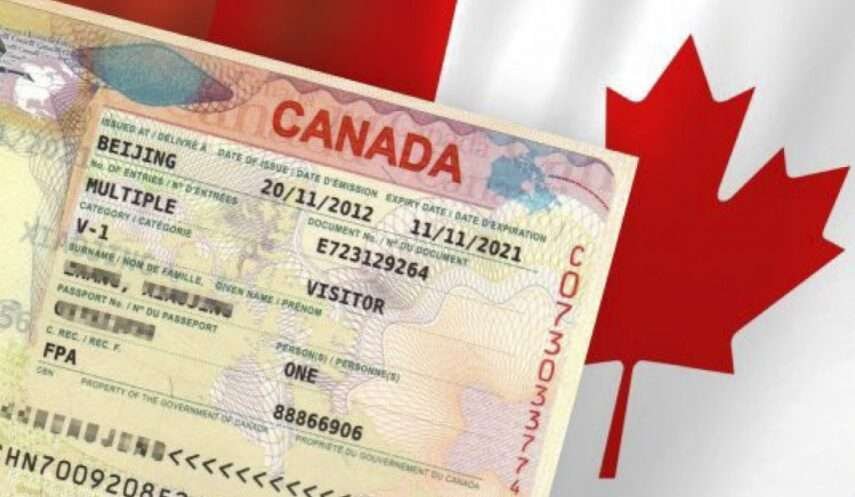
If you’re wondering what to do after visa refusal Canada, you’re not alone. Refusal is never fun. It’s disappointing, often stressful, and the waiting, uncertainty, rejections, hardly seem fair. But a refusal is not always the end of the line. In many cases, there are pathways forward. What matters is how you respond. You need to understand why you were refused, what your legal options are, what time limits apply, and how to present your case in the strongest way possible.
Here, with Visapath, we break this down: what Temporary Resident Permit, Authorisation to Return to Canada, appeals, judicial review mean; when they apply; what steps to take; and why professional guidance can make all the difference.
What Usually Happens When a Visa Is Refused
Before exploring remedies, let’s make sure you understand what a refusal does, and what it doesn’t do.
- You’ll get a refusal letter from the immigration authority (for example, IRCC in Canada) explaining reasons for refusal. Sometimes, these reasons are general or vague.
- A refusal does not always block you permanently but will often go on record. Previous refusals are taken into account in future applications.
- In many visa categories (especially temporary visas, visitor, work, study permits), there is no formal appeal route. That means you can’t “appeal” in the usual sense through a tribunal. You need to consider other legal paths.
- Time matters. Many legal remedies have strict deadlines. Miss them, and you often lose the chance to challenge the decision.
Key Pathways After a Visa Refusal
If your visa has been refused, the next steps depend entirely on your circumstances. In Canada, several options are available, each with its own conditions, advantages, and challenges. Let’s walk through them one by one.
Reapply With a Stronger Application
Sometimes the most straightforward option is to start fresh. A new application gives you the chance to address the reasons behind your refusal, whether that means providing stronger financial documents, more proof of ties to your home country, or correcting incomplete paperwork. This path works best when your situation has changed, or you can meaningfully improve your evidence. The upside is that you control what to fix, but if nothing changes, the risk of another refusal remains, often under even closer scrutiny.
Request Reconsideration
In some cases, visa officers make mistakes, overlooking key information, misinterpreting documents, or making factual errors. You can write to the same visa office and request reconsideration, asking them to review the decision. This process is informal and discretionary, which means officers aren’t required to grant it. While it is low cost and usually faster than other remedies, it doesn’t always succeed, and many applicants still end up needing to pursue more formal steps.
Temporary Resident Permit (Temporary Resident Permit)
For individuals who are otherwise inadmissible to Canada, for example, due to criminality, medical issues, or other barriers, a Temporary Resident Permit may be the solution. A Temporary Resident Permit is a discretionary permit that allows you to enter or remain in Canada temporarily if you can demonstrate compelling reasons. It’s particularly useful when the benefits of your presence outweigh the risks. That said, Temporary Resident Permits are often limited in duration, they cannot be appealed if refused, and their processing can be unpredictable.
Authorization to Return to Canada (ARC)
If you’ve been deported, removed, or made subject to an exclusion order, you’ll likely need an Authorization to Return to Canada before re-entering. An ARC serves as formal clearance from Canadian immigration authorities. Approval depends on factors like the reasons for your removal, what has changed since then, and whether you can demonstrate rehabilitation and strong ties. While an ARC can give you the opportunity to return legally, it can take time to process and is not granted if the original reasons for removal remain unresolved.
Judicial Review
When you believe a refusal was legally flawed or procedurally unfair, judicial review is a powerful remedy. This process involves asking the Federal Court to examine whether the decision was made reasonably, fairly, and according to law. It’s important to note that judicial review does not involve re-deciding your case, it focuses only on whether the decision-making process was proper. If successful, the refusal can be overturned and sent back to a different officer for reconsideration. The benefits are significant, but the process is complex, comes with legal costs, and is bound by strict deadlines: typically 15 days if you’re inside Canada or 60 days if you’re outside.
Appeals Through the Immigration Appeal Division (IAD) or Refugee Appeal Division (RAD)
Some refusals can be challenged through formal appeals. For example, family sponsorship refusals or certain removal orders may qualify for review by the Immigration Appeal Division or the Refugee Appeal Division. These appeals allow you to present new evidence and make arguments before a tribunal. While they offer a real chance to have your case reconsidered, not all refusals are appealable. The process can also be lengthy and requires careful preparation; professional representation is highly recommended.
Steps to Take Immediately After a Refusal
When your visa application is refused, what you do next can make or break your chances of success in the future. Timing, strategy, and preparation matter. Here’s a framework you should follow, step by step, in the right order.
1. Read the Refusal Letter Carefully
Your refusal letter is the key to understanding what went wrong. Don’t skim it, read every line closely. Identify all the reasons given, because there may be more than one. Was the problem procedural, like a missing document? Was it factual, such as insufficient financial proof? Or was it legal, meaning the officer may have misapplied a regulation? Sometimes refusals are based on credibility concerns, when the officer simply wasn’t convinced of your intentions. Pinpointing the category of refusal is essential for deciding your next move.
2. Request GCMS Notes or Case Notes
The refusal letter only tells part of the story. To understand the full reasoning, you should request the officer’s internal notes, often called GCMS notes. These provide detailed insights into what evidence was reviewed, what the officer questioned, and what might have been overlooked. In Canada, you can request these notes through an Access to Information and Privacy (ATIP) request. They can be invaluable in building a stronger case for your next step, because they highlight the exact weak points you must address.
3. Check Deadlines Immediately
Time is not on your side after a refusal. If you want to pursue a judicial review in Federal Court, you generally have 15 days if you’re in Canada, and 60 days if you’re applying from outside. Appeals, such as those to the Immigration Appeal Division (IAD), have their own strict deadlines depending on the type of decision. Missing these dates can shut down your options permanently. Acting quickly ensures you keep every pathway open.
4. Evaluate Your Options
Not every refusal needs a legal challenge. Sometimes, the smarter option is to reapply with stronger evidence. Ask yourself: can I fix the officer’s concerns with new documents, updated financial proof, or additional ties to my home country? Have my circumstances changed since I applied, such as a new job, property purchase, or family development? If yes, reapplying may be your best move. But if the refusal was due to a legal error, misinterpretation, or procedural unfairness, then an appeal or judicial review may be more effective.
5. Prepare for Temporary Resident Permit or ARC if Necessary
If your refusal is based on inadmissibility, you may need to take specialized routes:
- A Temporary Resident Permit (TRP) allows you to enter or stay in Canada temporarily if you can show compelling reasons. To succeed, you’ll need to demonstrate that the benefits of your presence outweigh the risks, and that you’ve addressed the original issues behind your inadmissibility.
- An Authorization to Return to Canada (ARC) is required if you were previously removed or deported. To strengthen an ARC application, you must show that the reasons for your removal have been resolved or mitigated, and that your circumstances have changed in meaningful ways.
6. Seek Professional Advice
This step cannot be overstated. Immigration law is technical, deadlines are rigid, and court procedures can be unforgiving. A licensed immigration lawyer or consultant can help you analyze whether the refusal was reasonable, prepare legal submissions, and represent you in judicial reviews if needed. Professional help not only avoids procedural mistakes but also increases your chances of turning a refusal into an approval.
7. File Your Application or Challenge Properly
Once you’ve chosen your path, whether reapplying, filing for a Temporary Resident Permit or ARC, or pursuing an appeal or judicial review, you must ensure every detail is correct. Your supporting documents should directly address the officer’s concerns, your forms must be complete, and your arguments must be clear and persuasive. Filing a sloppy or incomplete application will almost always result in another refusal. This final step is where preparation pays off.
Temporary Resident Permit vs ARC vs Judicial Review: How They Compare
When deciding how to respond to a refusal or inadmissibility issue, it’s important to understand the differences between a Temporary Resident Permit (TRP), an Authorization to Return to Canada (ARC), and a Judicial Review.
A Temporary Resident Permit is essentially a temporary solution for people who are inadmissible but have compelling reasons to enter or remain in Canada. It can be granted for up to three years, depending on the circumstances, and may be single-entry or multiple-entry. However, if a Temporary Resident Permit is refused, there is no formal appeal, you must reapply and present stronger or changed circumstances.
An ARC, on the other hand, applies when someone has been removed or deported from Canada and now seeks permission to return. Approval depends on factors such as why the person was removed, what has changed since then, and whether they can show rehabilitation or that the original issues no longer apply. While an ARC allows legal re-entry, it can take considerable time to process and, like Temporary Resident Permits, refusals generally cannot be appealed through a tribunal, though judicial review may sometimes be an option.
Finally, Judicial Review is very different. It is not a new application for a visa but a legal challenge in Federal Court, asking a judge to determine whether the refusal was made fairly and in line with the law. Unlike Temporary Resident Permits or ARCs, you cannot introduce entirely new evidence; the court mainly looks at what was before the decision-maker, except in limited exceptions. Judicial reviews are bound by strict deadlines, 15 days if you are in Canada and 60 days if you are outside, and while the court can overturn a refusal and send it back for reconsideration, it does not directly grant you a visa.
Why Professional Help Matters Visapath Can Help You Here
Experience With Similar Cases
At Visapath, we’ve handled countless refusal cases, and one thing is clear: what looks hopeless on paper is often salvageable with the right approach. Immigration officers frequently cite reasons such as weak financial proof, vague travel itineraries, incomplete documentation, or credibility concerns. Because we’ve seen these patterns so many times, we know how to anticipate objections and prepare stronger applications that directly address them.
Knowledge of Legal Standards
Immigration law is technical, and success often depends on understanding concepts that go beyond the surface. What does “reasonable” mean in the context of a judicial review? What exactly does procedural fairness require? How do you demonstrate that an officer misapplied policy or ignored relevant evidence? These are complex questions, and our team has the legal expertise to argue them effectively.
Strong Document Preparation and Presentation
The way you present your case matters as much as the documents themselves. A poorly drafted explanation letter or an unorganized set of evidence can undermine even strong facts. At Visapath, we ensure that every affidavit, legal argument, and supporting document is well-structured, easy to follow, and directly responsive to the officer’s concerns. Nothing is left vague or incomplete.
Meeting Deadlines and Compliance
When it comes to immigration law, deadlines are unforgiving. If a judicial review is filed even a day late, or if the wrong form is submitted, your case can be dismissed without consideration. Our team keeps track of every requirement, forms, rules, and timelines, so you don’t lose your chance because of a technical mistake.
Maximizing Your Chances of Success
At the end of the day, professional help is about strategy and results. With Visapath guiding you, you avoid wasting time and money on the wrong option. We assess whether your best chance lies in reapplying, seeking a Temporary Resident Permit, applying for an ARC, or pursuing a judicial review. Then we build the strongest case possible to give you the best odds of success.
A Case Study
To make this concrete:
Imagine you applied for a Visitor Visa (Temporary Resident Visa) to Canada from your home country. You were refused. The officer said your financial documents were insufficient, and they doubted you would leave at the end of your stay (i.e. weak “ties” to your home country).
What would you do?
- Request GCMS notes to see exactly what was missing or where the officer thought evidence was weak.
- Gather stronger documentation: proof of employment, assets, family obligations (elderly parents, property), previous travel history. Possibly a letter of intent with itinerary, proof of accommodation, round-trip flight bookings, etc.
- If there is new evidence, consider reapplication, along with a cover letter explaining changes.
- If you believe the refusal was based on misunderstanding or error of fact/law, or officer ignored evidence, explore judicial review: find a lawyer, meet deadline, prepare your legal argument.
Visapath would assist you at each step, from reading your refusal letter, gathering documents, making sure your new application or challenge is airtight, and representing you if needed.
Common Mistakes to Avoid
One of the biggest errors applicants make after a refusal is reapplying without actually addressing the original reasons for denial. Immigration officers will almost always look back at your history. If the same weak points remain, whether it’s insufficient financial proof, unclear travel plans, or vague ties to your home country, the outcome is usually another refusal.
Another common pitfall is waiting too long. Judicial reviews and ARC applications are bound by strict deadlines, and missing them often means losing the opportunity to challenge the decision altogether. Timing is critical, and procrastination can be costly.
Documentation is another area where applicants often stumble. Submitting incomplete or inconsistent information weakens your credibility and raises more questions than answers. Equally problematic is proceeding without requesting GCMS notes, the officer’s internal case notes that often reveal the real reasoning behind the refusal. Without these insights, you’re essentially working in the dark.
Finally, many applicants try to take on judicial reviews or appeals without professional support. Immigration court procedures are highly technical, and even small mistakes can sink a case. Without a representative guiding you, the risks of errors and missed opportunities multiply.
Action Plan: What Should You Do Now?
If your visa has been refused, don’t panic. What matters most is how you respond in the days and weeks that follow. Here’s a smart, step-by-step plan to get you back on track:
Step 1: Review your refusal letter carefully.
This document outlines why your application was denied. Every reason listed is a clue to what you need to address moving forward.
Step 2: Request the GCMS notes or officer’s internal notes.
These notes often contain the officer’s thought process and can reveal details not included in the refusal letter. Without them, you’re working blind.
Step 3: Decide on your pathway.
Ask yourself: will a stronger reapplication fix the issue? Do you need a Temporary Resident Permit (Temporary Resident Permit) or Authorization to Return to Canada (ARC)? Or does your case call for a judicial review or formal appeal? Choosing the right strategy here is critical.
Step 4: Collect and organize your evidence.
Strong documentation is the heart of any immigration case. This might include financial proof, employment verification, property records, or family ties that show your genuine intent. Make sure every claim you make is backed up with clear, consistent evidence.
Step 5: Consult
A professional with experience in refusals, Temporary Resident Permits, ARCs, and judicial reviews can save you time, money, and stress. They’ll analyze your case, advise on the best route, and help you avoid costly mistakes.
Step 6: Prepare and submit your application or challenge.
Whether you’re reapplying, filing for a Temporary Resident Permit/ARC, or taking the matter to court, accuracy and timing are everything. Every form must be complete, every deadline met, and every argument presented clearly and convincingly.
When Each Path is Likely to Succeed
Not all options are equally promising in all cases. Here are scenarios in which each tends to work best:
- Reapplication: when the reason was missing documents, weak proof of finances, lack of clarity. When you can supply stronger evidence (more assets, better relationship proofs, clarified travel plan).
- Temporary Resident Permit: when refusal was because of inadmissibility (criminal past, medical issues etc.), but you have compelling justification (urgent travel, family, business) and can show mitigation.
- ARC: when you were removed, deported, or had an exclusion/exclusion order and it’s possible to demonstrate change, rehabilitation, or that you now meet requirements.
- Judicial Review: when the decision seems to have legal error, procedural unfairness, unreasonableness or officer failed to consider evidence. Not for re-arguing merits only; it’s about how the decision was made.
- Appeal via IAD / RAD: only when law gives you that right (e.g. family sponsorship refusals). Good chance when you have strong personal, humanitarian or compassionate factors.
Final Word
A visa refusal is a setback, yes, but it’s not always a full stop. With the right knowledge, swift action, and correct strategy, many people reverse refusals or win new applications. At Visapath, we guide our clients through this process every day. We can help you review the refusal, find your best path, build evidence, meet legal standards, file effectively, and represent you when needed. If you’ve been refused, reach out, we’ll assess your case together and map out your options.
Frequently Asked Questions
1. Can I stay in Canada while waiting for judicial review or appeal?
It depends. If your status allows it (you already are in Canada under a permit that hasn’t expired), you might stay. If a removal order is involved, you may need a stay of removal application. Always check with a lawyer immediately.
2. Does a refusal automatically make future applications harder?
Yes, past refusals are recorded and considered. But impact depends on why you were refused, how you respond, whether you can address the concerns. One flaw can be fixed; the key is how you build your case next.
3. How long does judicial review or ARC/Temporary Resident Permit process take?
Varies a lot. Judicial review may take several months (including leave stage, hearing, decisions). Temporary Resident Permit processing times also vary depending on location, complexity. ARC may also take time especially if serious inadmissibility or removal issues.
4. What evidence is most persuasive?
Documents that show strong ties to your home country (employment, family, property), evidence of finances, travel history, consistency of your application, clarity of purpose, proof that original reasons are now resolved. Also, legal documents that show rehabilitation if applicable.
5. Is it expensive?
There are government fees for applications, court filing fees, plus legal counsel fees. Costs vary depending on whether you hire a representative, if the hearing is oral, if you need expert reports or translations, etc. But cost is smaller compared to long delays or repeated rejections.
6. If I lose judicial review, do I have any other option?
Possibly, depending on your case. You might reapply, seek leave to appeal (if available), or explore alternative immigration paths. But losing judicial review often means the refusal stands unless new legal or factual arguments can be made.
